Christian Cross with Lamb Embroidery
First Impression: Soft, Farmhouse Faith with Easter Heart
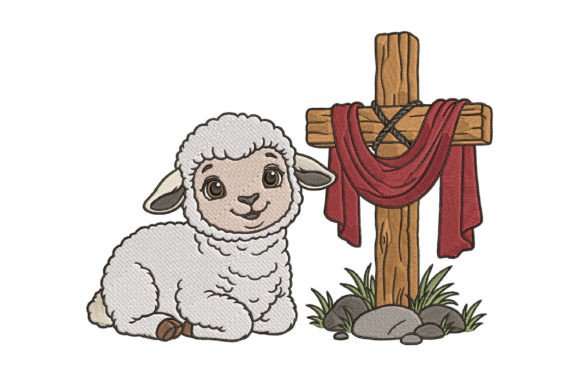
As an embroidery designer who’s prepped over 200 craft fair booths, my first read on Christian Cross with Lamb Embroidery is immediate and warm: it reads as gentle, reverent, and quietly joyful—not preachy, not overly ornate, but deeply intentional. The pairing of a “sweet lamb” beside a “wooden cross draped with cloth” lands squarely in the farmhouse-spiritual sweet spot—think linen tea towels at a spring boutique, not stained-glass stencils for church bulletins. It’s Easter-adjacent without being seasonal-only; customers recognize its symbolism instantly, yet it feels personal, not mass-produced. That balance is gold for handmade markets.
Where This Design Shines on Craft Fair Products
In real-world booth testing, Christian Cross with Lamb Embroidery performs strongest where softness and storytelling matter most:
- Tote bags: Works beautifully centered on natural canvas or oatmeal linen—large enough to read from three feet away, small enough to leave room for handwritten tags or botanical stamps.
- Aprons: Ideal above the pocket or subtly on the bib. The lamb’s roundness reads well against curved fabric, and the wooden cross adds texture contrast that photographs cleanly online.
- Tea towel embroidery: A top performer. On flour-sack cotton or unbleached linen, the design feels heirloom-ready—especially when paired with hand-stitched hems and twine loops.
- Embroidered patches: Highly versatile. Customers love stitching these onto denim jackets, backpacks, or baby blankets—and this design scales down cleanly to 3–4 inches without losing legibility.
- Pillow covers & small pouches: Adds quiet meaning to giftable items. On oat or ivory linen, it elevates a simple product into a “thoughtful handmade gift” category.
It’s less effective on curved surfaces like caps (the lamb’s delicate features may distort) or ultra-dense fabrics like heavy duck canvas—unless you adjust stitch density intentionally.
What Makes It Sell—And What Requires Care
This machine embroidery design earns attention because it’s emotionally resonant *and* visually legible. At a glance, shoppers get the message: faith, gentleness, hope. No decoding needed. That clarity drives impulse buys at craft fairs—especially among moms, grandmothers, and faith-based small shop owners curating meaningful inventory.
But practicality matters just as much. As a working designer, I always ask: Can I run 25 of these before lunch? With Christian Cross with Lamb Embroidery, yes—if you prep wisely. It’s not overly dense, but the cloth drape on the cross and lamb’s wool texture suggest moderate stitch density. Tiny details (like lamb’s ear contour or cloth folds) demand sharp needles and quality thread. Avoid pushing it below 2.5 inches wide unless you’ve tested on your exact fabric combo.
Careful-Use Notes Every Embroiderer Should Check
- Dense stitch areas: The draped cloth and lamb’s fleece may cluster tightly—verify hoop stability and use medium-weight cutaway stabilizer on lightweight fabrics.
- Fabric texture: On highly textured tea towels or burlap-blends, reduce underlay or add light topping to prevent skipped stitches.
- Dark fabric: Test thread contrast thoroughly. Cream or ecru thread reads softly on navy or charcoal—but may vanish on black without metallic or variegated accents.
- Curved surfaces: Skip direct cap embroidery unless you’re using a specialized cap frame and have verified alignment on scrap.
- Small sizes: Below 2 inches, the lamb’s face and cross grain can blur. Reserve tiny versions strictly for patches or lining labels—never as a primary focal point.
How It Strengthens Your Booth & Brand
Christian Cross with Lamb Embroidery isn’t just another digital embroidery file—it’s a visual anchor. When grouped with neutral-toned products (oat aprons, stone-gray pouches, ivory pillow covers), it creates cohesion without monotony. Customers pause longer. They photograph it. They ask, “Is this for Easter?” and you say, “It’s for everyday faith”—and suddenly you’re having a conversation, not a transaction.
For Etsy sellers and small shop owners, this design boosts perceived value: handmade + meaning = higher price tolerance. Pair it with a short story card (“Inspired by Psalm 23”) and watch engagement rise. In mockups, it photographs with warmth and authenticity—no heavy filters needed. And because it’s not trend-dependent, it supports brand consistency across seasons.
Designer-to-Designer Production Checklist
Before cutting your first production run, do this:
- Test the embroidery file on scrap fabric matching your final product—same weight, weave, and dye lot.
- Check thread contrast under both daylight and booth lighting (LED tents can wash out cream tones).
- Review spacing between lamb and cross—tight gaps risk stitching bleed on plush fabrics.
- Confirm hoop size compatibility with your machine and product type (e.g., 5x7" works for most tote bags; 4x4" for patches).
- Inspect stitch density—look for puckering on test runs and adjust tension if needed.
- Use the right stabilizer: cutaway for knits and stretchy fabrics, tear-away for stable wovens like linen or cotton duck.
- Create at least one real-life finished product—not just a digital mockup—to assess scale, drape, and emotional impact.
- Compare fabric colors side-by-side: oat, ivory, and natural linen all reflect light differently—what looks serene on screen may feel muted in person.
- Verify commercial licensing status before selling embroidered goods—this is non-negotiable for any commercial embroidery use.
Remember: the best craft fair product isn’t just stitched well—it’s felt deeply. Christian Cross with Lamb Embroidery delivers that when treated with intention. Use it thoughtfully, test relentlessly, and let its quiet reverence speak for itself.