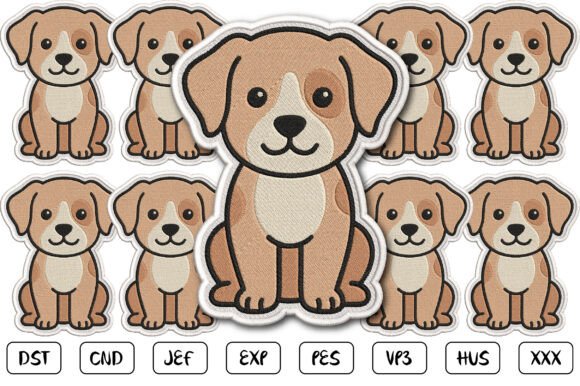
Cute Dog Patch Embroidery Design
First Impressions: Sweet, Simple, and Stitch-Ready
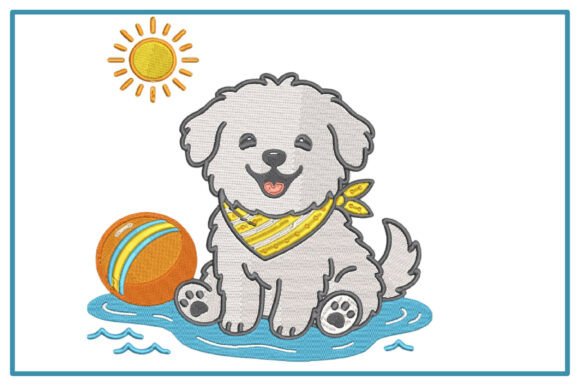
When I opened the Cute Dog Patch Embroidery Design, what struck me wasn’t just the kawaii charm—but how intentionally *designed for real stitching* it feels. The soft, rounded silhouette of the puppy, the gentle curve of its ears, and that clean satin border all signal thoughtful digitizing. This isn’t a clipart-style doodle dropped into an embroidery file. It’s a machine embroidery design built to hold shape on fabric—not just look cute on screen. As someone who’s stitched hundreds of dog-themed designs for Etsy sellers and boutique clients, I immediately pictured it on a linen tea towel, a cotton baby onesie, or a denim tote bag—places where warmth and clarity matter more than complexity.
A Real Project in Mind: Stitching It on a Linen Apron
Last week, I prepped this design for a small-batch order: embroidered linen aprons for a local bakery’s staff gifts. The Cute Dog Patch Embroidery Design landed perfectly at 3.2” wide—large enough to read clearly, small enough to sit neatly above a pocket without overwhelming the fabric’s natural texture. On medium-weight linen with tear-away stabilizer, the satin border held crisp edges, and the fill stitches stayed smooth and even—not puffy, not sparse. Customers commented on how “friendly” and “handmade-but-polished” the pup looked—not cartoonish, not stiff. That balance is rare. It makes the finished product feel intentional, not generic.
Where It Shines (and Why)
- Custom apparel: Works beautifully on sweatshirt embroidery and lightweight t-shirts—especially when paired with a subtle thread palette (heather gray + cream, or navy + butter yellow).
- Embroidered patch: The clean satin border means it’ll peel cleanly from backing and sew or iron onto jackets, backpacks, or denim without fraying.
- Baby embroidery: Rounded shapes and minimal fine detail mean no snag hazards—ideal for onesies, burp cloths, or nursery pillow covers.
- Holiday embroidery & personalized gifts: Add a tiny red bow or heart near the ear (with a quick manual edit), and it becomes a sweet Christmas or adoption-day keepsake.
- Craft business & Etsy seller use: It reads well in printable mockups and digital previews—clean lines translate reliably across screens and printed tags.
Where to Pause—and Test First
This isn’t a one-size-fits-all workhorse. Like any well-crafted machine embroidery design, it has natural boundaries. Here’s where I’d advise caution:
- Stretchy fabric: Knits or ribbed cuffs need extra stabilization—test stitch density first. Too much fill stitch can cause puckering; too little loses definition.
- Thin or sheer fabric: The satin border may show through on voile or lightweight rayon. A light cutaway stabilizer helps—but always test on scrap.
- Curved surfaces like caps: The design’s width fits comfortably on front panels, but avoid placing it too high on the crown—it distorts if stretched over deep curves.
- Dark fabric backgrounds: While it looks lovely in black thread on white, reversing contrast (e.g., white thread on navy) demands checking fill stitch density—some areas may appear thin or translucent.
- Frequent-wash items: Not a flaw—but confirm thread quality and stabilizer choice. Satin borders hold up best with polyester thread and proper underlay.
What It Adds to Your Finished Product
The Cute Dog Patch Embroidery Design quietly elevates perceived value. On a handmade product, that friendly expression builds instant emotional connection—especially for pet lovers, new parents, or animal rescue supporters. For a small shop product or Etsy listing, it reads as “thoughtful,” not mass-produced. Buyers notice the evenness of the satin stitch, the absence of stray jump stitches, and how the dog’s face stays legible even at smaller sizes. That level of polish builds customer trust faster than any description ever could.
It also supports brand consistency—whether you’re curating a line of pet-themed kitchen textiles or launching a series of nursery decor. Its visual personality is warm but not childish, detailed but not fussy. And because it avoids tiny lettering or intricate linework, it scales cleanly across formats: digital embroidery file previews, physical patches, and even sublimation mockups.
Practical Designer Notes Before You Stitch
- Always test on scrap fabric—especially with your exact stabilizer, thread, and machine tension settings.
- Review stitch density in your embroidery software. If fill areas look overly dense or sparse, adjust slightly before hooping.
- Confirm hoop size. This design likely fits comfortably in a 4” x 4” hoop—but double-check the actual dimensions in your file viewer.
- Inspect small details in the eyes or nose. Even subtle running stitch accents should land cleanly—no floating threads or skipped jumps.
- Test in black and white mockups. Does the shape still read clearly without color? It should.
- Use proper stabilizer: Tear-away for stable wovens, cutaway for knits or lightweight fabrics.
- Verify licensing before selling finished items or bundling the digital embroidery file—especially for commercial embroidery or craft business resale.
Final Thought: A Reliable, Human-Centered Design Asset
The Cute Dog Patch Embroidery Design doesn’t try to be everything. It’s not hyper-realistic, not minimalist, not vintage or retro. It’s simply kind, clear, and capable—like a well-designed tool you reach for again and again. Whether you’re stitching a single personalized gift or building a cohesive line of dog-themed embroidery project kits, this design earns its place in your library not because it shouts, but because it delivers—consistently, quietly, and with real charm.