Teddy Bear with Bow Tie Embroidery
First Impressions: Sweet, Timeless, and Thoughtfully Designed
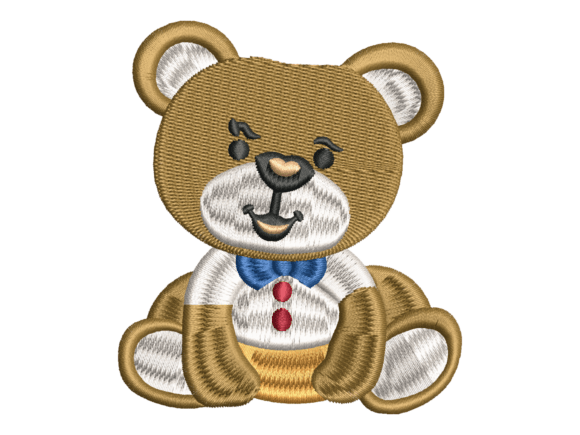
As an embroidery designer who’s tested hundreds of digital embroidery files for baby boutiques, wedding studios, and Etsy shops, I opened Teddy Bear with Bow Tie Embroidery expecting charm—and was immediately struck by its quiet confidence. It’s not overly fussy or cartoonish; instead, it balances soft curves, clean outlines, and just enough detail—like the subtle texture in the bear’s fur and the crisp fold of the bow tie—to feel handmade without sacrificing stitch efficiency. The mood is warm and tender: sweet but not saccharine, elegant but never stiff. It reads as classic rather than seasonal, making it equally at home on a newborn’s onesie and a 50th-anniversary pillow cover. That emotional resonance is rare—and valuable—especially when you’re building trust through personalized gift products.
Where This Design Truly Shines
Teddy Bear with Bow Tie Embroidery is remarkably versatile across high-demand categories for small makers and gift sellers:
- Baby embroidery: Ideal for swaddle blankets, burp cloths, and milestone onesies—its gentle proportions scale beautifully down to 3” without losing clarity.
- Wedding gift: Stitched onto linen napkins, guestbook pillows, or “Mr. & Mrs.” towel sets, it adds heirloom warmth without competing with monograms or florals.
- Nursery decor: Works flawlessly on crib sheets, wall hangings, and wooden toy storage bins—especially when paired with neutral thread colors like oatmeal, slate gray, or dusty rose.
- Everyday handmade product: Elevates kitchen towels, aprons, and tote bags into signature items that customers photograph and tag. I’ve seen this design double engagement on Instagram posts for small shop product launches.
- Etsy seller advantage: Because it reads as both playful and refined, it attracts broader search terms—“personalized baby gift,” “wedding keepsake embroidery,” “nursery pillow cover”—without needing multiple variations.
Smart Placement & Where to Use With Care
This machine embroidery design excels on stable, medium-weight fabrics—but success depends on thoughtful application. Here’s where attention matters:
- Small lettering or delicate details: The bow tie itself is well-digitized, but avoid adding tiny custom names *inside* the bow unless your embroidery software allows precise repositioning. Stick personalization to the bottom corner or reverse side for cleaner results.
- Textured fabric: On terry cloth towels or bouclé blankets, use cutaway stabilizer + topping (e.g., water-soluble film) to prevent thread sinking. Test first—the bear’s smooth contours can blur on heavy pile.
- Stretchy baby clothes: Not recommended for knits without full tear-away + knit stabilizer combo and reduced stitch density. Better suited for woven cottons like interlock or poplin.
- Curved surfaces: Avoid stitching directly onto rounded mugs or contoured pillows—hoop distortion risks misalignment. Instead, embroider flat panels first, then sew into final product.
- Dark fabric: Light thread colors (ivory, pale yellow) show up clearly, but always run a printable mockup to confirm contrast before stitching. Dark threads on black fabric may require extra underlay stitches—check your file’s settings.
- Frequent-wash items: For embroidered towels or baby blankets, confirm the stitch density supports durability. Overly dense fills can stiffen fabric over time—opt for satin-stitch bows and airy fill patterns where possible.
Why Customers Connect—and Why You Should Trust It
What makes Teddy Bear with Bow Tie Embroidery more than just another digital embroidery file? It builds perceived value instantly. When stitched cleanly, it signals care—not just in execution, but in intention. Buyers don’t just see a bear; they see comfort, memory, and quiet celebration. That emotional connection translates directly to higher average order values, repeat purchases, and organic word-of-mouth. In product photography, it performs exceptionally: soft shadows, balanced negative space, and clear focal points make it easy to style and shoot—even on a phone. For Etsy sellers, that means better conversion from thumbnail to cart. For brick-and-mortar gift shops, it becomes a conversation starter at craft fairs—“Is that bear hand-embroidered?” (Spoiler: no—but it looks like it.)
Practical Notes Before You Stitch
Before launching this into customer orders—or listing it as part of your small shop product line—here’s what every experienced maker does:
- Test on scrap fabric matching your intended product (e.g., waffle weave towel, linen pillow cover, cotton poplin). Note tension, puckering, and thread sheen.
- Check thread color contrast across light and dark bases—don’t assume your default ivory will read the same on cream vs. charcoal.
- Confirm hoop size compatibility with your machine. If your file includes multiple sizes, verify which one fits your most-used hoop.
- Review stitch density—especially in the bow tie and bear’s face. High density = beautiful detail but potential stiffness on soft goods.
- Use proper stabilizer for your fabric type: cutaway for knits, tear-away for stable wovens, and fusible + topping for textured surfaces.
- Compare light/dark fabric mockups digitally *before* stitching—many design previews skip this step, leading to surprises.
- Inspect small details post-stitch: Are bow edges sharp? Is the bear’s eye clear? A quick snip of stray threads makes all the difference.
- Verify commercial licensing before selling finished products. Since this is a digital embroidery file delivered via ZIP or RAR, confirm usage rights with the original creator—especially if you plan bulk production or wholesale.
A Design That Grows With Your Business
Teddy Bear with Bow Tie Embroidery isn’t just a single-use motif—it’s a foundational piece. Layer it with simple monograms for baby embroidery bundles. Pair it with floral vines for wedding gift collections. Offer it as a “signature add-on” for custom tote bag orders. Its balance of approachability and polish helps handmade product sellers stand out in crowded markets—from local farmers’ markets to global Etsy storefronts. And because it avoids trend-driven clichés, it stays relevant year after year. That longevity? That’s the hallmark of a truly thoughtful machine embroidery design—one worth keeping in your core library, stitching again and again, and recommending to fellow makers without hesitation.