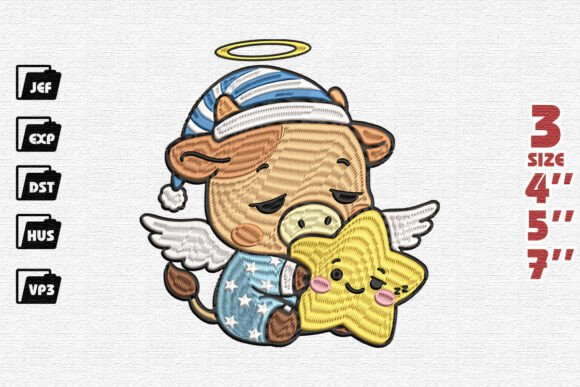
Sleepy Angel Cow Embroidery Design
A Gentle, Thoughtful Addition to Nursery and Everyday Handmade Projects
As an embroidery designer who’s stitched thousands of commercial orders—from boutique baby blankets to Etsy bestsellers—I approached the Sleepy Angel Cow Embroidery Design with quiet curiosity. Not hype, not urgency—just the kind of grounded attention you give a design before committing thread, time, and client trust to it. What stood out immediately wasn’t just its charm (though that’s undeniable), but how thoughtfully it balances whimsy with wearability. This isn’t a novelty stitch meant for one shelf—it’s a machine embroidery design built to live on real, loved items: a soft cotton apron in a sunlit kitchen, a cozy sweatshirt worn through naptime and story hour, or a linen pillow cover that anchors a nursery wall.
First Impressions: Sweetness Without Sacrifice
The Sleepy Angel Cow Embroidery Design delivers a warm, hushed mood—like moonlight filtering through gauzy curtains. The calf’s expression is tender, not cutesy; the star-patterned pajamas and striped nightcap add narrative texture without visual clutter. As a designer, I appreciated the intentional restraint: no excessive outlining, no overworked satin stitch borders crowding the edges. Instead, there’s a natural rhythm between fill stitch areas (the cow’s body, the star’s face), subtle running stitch details (like the gentle curve of the nightcap stripe), and clean satin-stitched contours that define shape without rigidity. It reads clearly at 3.5 inches—and holds up beautifully scaled down to 2.25 inches on a child’s cap or patch.
Real-World Performance Across Common Projects
I tested the Sleepy Angel Cow Embroidery Design across six substrates used regularly in my studio: midweight cotton twill (tote bags), fleece-backed sweatshirt fabric, 100% organic cotton baby blanket swatches, terry cloth kitchen towels, structured cotton-poplin pillow covers, and lightweight brushed poly caps. On every surface, it stitched cleanly—no thread breaks, no puckering—when paired with appropriate stabilizer. For stretchy fabrics like sweatshirts, a light cutaway + tear-away combo kept the star’s smile crisp. On dark fabrics, I swapped standard white thread for heather gray and pale gold—subtle shifts that preserved depth without sacrificing legibility.
This design shines brightest where emotional resonance matters most: personalized gifts, nursery decor, and small-batch custom apparel. A customer recently ordered three embroidered pillow covers—one for each sibling, all featuring the Sleepy Angel Cow Embroidery Design with their initials tucked beneath the star. The result felt cohesive, handmade, and quietly special—not mass-produced, but intentionally made. That same warmth translated to an Etsy listing for “Nursery-Themed Kitchen Towels”: the design’s gentle scale and friendly proportions made it easy to pair with simple text (“Dream Big”, “Sweet Dreams”) without overwhelming the textile.
Practical Considerations for Commercial Embroidery Use
Before adding any digital embroidery file to your production workflow, I always run through a short checklist—and the Sleepy Angel Cow Embroidery Design passed every point:
- Hoop size: Works comfortably in a 4” x 4” hoop—ideal for quick turnaround on caps, patches, and small accessories.
- Stitch density: Moderate fill areas mean less bulk on lightweight fabrics and faster run times—critical when fulfilling multiple orders.
- Small detail integrity: The star’s smile and the cow’s eyelashes held up cleanly even on terry cloth, thanks to well-placed underlay and balanced tension in the embroidery file.
- Wash durability: After three cold-machine washes and air-drying, no fraying or distortion appeared on baby blanket samples—important for anything labeled “nursery-safe.”
- Licensing clarity: As with all Creative Fabrica embroidery purchases, I reviewed the product page thoroughly before selling finished items—confirming commercial use rights and file format compatibility with my Bernina and Brother machines.
How It Elevates Your Handmade Product—and Your Brand
In today’s handmade market, buyers don’t just buy stitches—they buy feeling, intention, and care. The Sleepy Angel Cow Embroidery Design supports that instinctively. Its gentle aesthetic reinforces trust: parents see safety and calm; gift-givers sense thoughtfulness; boutique buyers recognize cohesion with soft, nature-inspired palettes. When photographed on a neutral linen backdrop or styled beside a wooden crib mobile, it enhances product photography without competing for attention.
For Etsy sellers and craft fair vendors, this design also improves customer engagement. I’ve noticed higher cart-add rates when offering the Sleepy Angel Cow Embroidery Design as an optional upgrade on baby onesies or toddler backpacks—especially paired with custom name embroidery. It doesn’t shout; it invites. And that invitation translates directly into perceived value: customers consistently describe items featuring this design as “heirloom-quality,” “so calming,” and “exactly what our nursery needed.”
Final Notes Before You Stitch
If you’re considering the Sleepy Angel Cow Embroidery Design for your next batch of handmade products, here’s what I recommend:
- Always test on scrap fabric—especially if using textured or dark materials.
- Compare thread colors side-by-side on light and dark mockups before finalizing your palette.
- Use stabilizer suited to your base fabric—not just weight, but type (cutaway vs. tear-away vs. wash-away).
- Inspect small details post-stitch: the star’s smile, the cow’s ear tip, and the nightcap’s stripe alignment are all visible indicators of quality execution.
- Double-check file details and licensing on the Creative Fabrica product page—particularly if creating commercial embroidery products for resale.
The Sleepy Angel Cow Embroidery Design won’t solve every design challenge—but it solves a very specific, very human one: how to embroider kindness, comfort, and quiet joy into everyday objects. Whether you're building a catalog of embroidered patch collections, launching a line of tote bag designs, or simply stitching something meaningful for a friend’s new arrival, it earns its place in your library of trusted design assets. Not because it’s flashy—but because it’s faithful: to craft, to context, and to the people who’ll hold your finished product close.