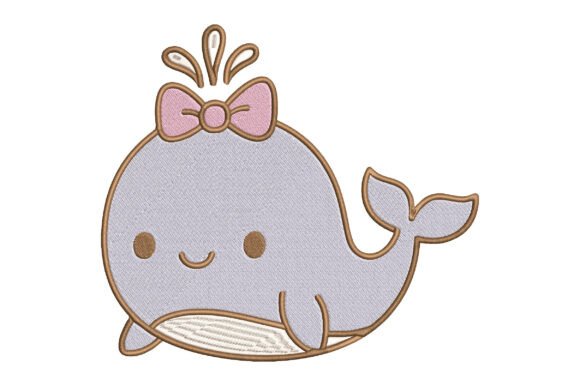
Cute Blue Whale Embroidery Design
First Impression: Soft, Playful, and Instantly Recognizable
As an embroidery designer who’s prepped over 200 craft fair booths—and shipped thousands of embroidered nursery items—I opened Cute Blue Whale Embroidery Design expecting charm, not clutter. What I found was exactly that: a clean, friendly silhouette with gentle curves, balanced negative space, and a whimsical but grounded energy. It reads as soft, not cutesy; modern, not trendy; and premium, not generic. That’s rare in the nursery category—where so many whale motifs lean either cartoonish or overly minimalist. This one lands right in the sweet spot: approachable enough for baby gifts, refined enough for boutique aprons and linen tea towels.
Where It Shines on Craft Fair Products
Cute Blue Whale Embroidery Design thrives where personality meets practicality. On a natural canvas tote bag? Perfect—it anchors the piece without overwhelming. On a denim apron? It adds warmth and story, especially when placed just above the pocket. For tea towel embroidery, it scales beautifully at 3.5–4 inches wide: large enough to read from three feet away, small enough to leave room for hand-stitched hems or coordinating fabric prints.
As an embroidered patch? Excellent. Its outlines are crisp, internal details are simplified (no micro-feathers or nested fins), and stitch density stays moderate—meaning low risk of puckering on lightweight twill or cotton backing. On pillow covers and small fabric pouches, it becomes a quiet signature—elegant, not loud. And yes, it works on caps—but only if hooped carefully on structured front panels. Avoid curved bill surfaces unless you’ve tested stabilizer layers first.
What Makes It Sell at Market Stands
At a craft fair, attention is measured in seconds. Cute Blue Whale Embroidery Design wins because it’s instantly legible—even in peripheral vision. No squinting. No decoding. Customers recognize “whale” + “blue” + “friendly” before they even stop walking. That’s critical for booth flow. Paired with soft blues, oatmeals, and sage greens, it elevates a simple market bag into a curated handmade product. Buyers don’t just see embroidery—they see intention, care, and a cohesive brand voice.
It also photographs exceptionally well for Etsy listings and printable mockups. The shape holds contrast against light and mid-tone fabrics, and thread colors (assuming standard blues, whites, and subtle grays) pop without looking harsh. No heavy shadows, no blown-out highlights—just honest texture and dimension. That translates directly to higher click-through rates and fewer “Is this really embroidered?” questions in your DMs.
Practical Production Notes Every Seller Should Know
- Test on scrap fabric first—especially with textured towels or thick denim. Stitch density matters more than line weight here; dense fills can flatten on terry cloth unless stabilized properly.
- Avoid dark fabric without high-contrast thread. Light blue or ecru thread on navy or charcoal may disappear. Stick to white, cream, or true cobalt for visibility.
- No tiny lettering or fine linework—so no scaling down below 2.25 inches. At smaller sizes, the eye loses definition, and the design reads as a blob, not a whale.
- Hoop size compatibility is likely standard (4x4 or 5x7), but always verify before batching. If your machine requires re-hooping mid-design, it’ll slow production—and increase error risk.
- Use cutaway or tear-away stabilizer depending on fabric stretch. Lightweight knits need more support than quilting cotton. Never skip stabilizer on caps or curved surfaces.
Design Assets That Build Your Small Shop Product Line
Cute Blue Whale Embroidery Design isn’t just a single motif—it’s a versatile design asset. Use it as a focal point on a set of three embroidered tea towels (whale, cloud, moon), or repeat it subtly along the hem of a linen crib sheet. Pair it with minimalist monograms for personalized baby gifts, or flip it vertically as a vertical accent on a tall market tote. Because it avoids excessive detail, it’s highly repeatable across batch production—no stitch-count surprises, no thread breaks mid-run.
For Etsy sellers and digital embroidery file shops, this design supports strong visual storytelling. Bundle it with matching SVG files for iron-on transfers or printable nursery art, and you’ve got cross-platform appeal. Just remember: confirm commercial licensing before selling finished products. The description says “ideal for decorating clothing, accessories, home”—but never assume rights extend to resale unless explicitly granted.
Booth Display Strength & Buyer Engagement
In person, Cute Blue Whale Embroidery Design performs like a quiet magnet. It doesn’t shout—but it invites touch, conversation, and connection. Parents pause. Grandparents smile. Interior designers snap photos. Why? Because it feels handmade *and* intentional—not mass-produced, not overly precious. When stitched on organic cotton pillow covers beside hand-dyed yarns and ceramic mugs, it reinforces your booth’s authenticity.
Place one real mockup—a whale-embroidered apron draped over a wooden stool, next to a matching tea towel folded beside a small pouch—within arm’s reach. That tactile trio builds trust faster than ten printed signs. People want to imagine this in their own homes, kitchens, nurseries. And Cute Blue Whale Embroidery Design makes that easy.
Final Designer Verdict
This isn’t just another machine embroidery design. Cute Blue Whale Embroidery Design is a thoughtful, market-ready asset—designed for clarity, built for consistency, and styled for emotional resonance. It fits seamlessly into nursery collections, but its versatility extends far beyond: think coastal cafes, eco-conscious boutiques, teacher gift sets, or even gender-neutral baby showers. If you’re curating craft fair products—or building a scalable embroidery business—this design earns its place in your core collection. Just remember: test, stabilize, photograph honestly, and always lead with the handmade quality it deserves.