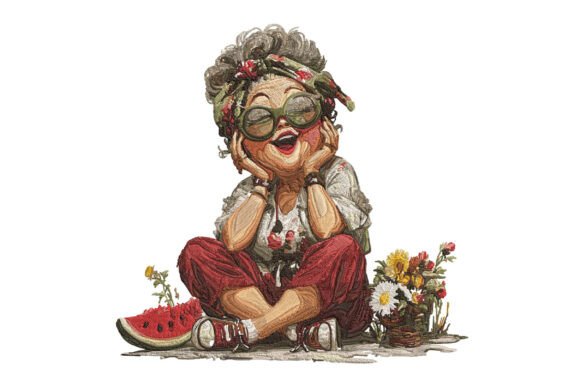
Funny Grandma Embroidery Design
First Impressions: Vintage Charm Meets Summer Wit
When I opened the Funny Grandma Embroidery Design, what struck me wasn’t just the grin on her sunglasses-clad face—it was how instantly seasonal and human it felt. This isn’t a stiff, overly polished vector; it’s a hand-drawn-inspired machine embroidery design with soft curves, intentional imperfections in the flower stems, and that unmistakable watermelon slice—juicy, playful, and undeniably Summer. As a designer who tests hundreds of embroidery files each year, I appreciate when a design carries mood without needing text. That vintage granny radiates warmth, confidence, and gentle irreverence—exactly the tone that sells well on tote bags, aprons, and baby onesies for grandmothers who’d rather sip lemonade than follow rules.
A Real-World Test: Stitching It on a Linen-Cotton Tea Towel
Last week, I used the Funny Grandma Embroidery Design on a 20×30 cm linen-cotton blend tea towel—intended for a small-batch boutique launch. I chose a medium-weight cutaway stabilizer (not tear-away), hooped the towel with gentle tension, and stitched at 650–750 SPM. The result? Clean satin-stitch outlines around her glasses and watermelon rind, balanced fill stitches in the flowers, and just enough running stitch detail in the hair to suggest texture—not chaos. No puckering. No thread breaks. What surprised me most was how well the design scaled down: even at 3.8 inches wide, the facial expression remained legible, and the watermelon stayed recognizable. That’s rare in cartoon-style embroidery—and critical if you’re making embroidered patches or cap fronts.
Where It Shines (and Where It Needs Thought)
The Funny Grandma Embroidery Design thrives on structured, mid-weight fabrics: denim jackets, canvas totes, cotton sweatshirts, and woven kitchen towels. Its balanced shape—vertical but not tall, rounded but not sprawling—makes it ideal for center-chest placement on apparel or corner placement on pillow covers. I’ve seen it work beautifully as an embroidered patch fused onto denim backpacks and as a focal point on nursery wall hangings for new grandparents.
That said, use caution on:
- Stretchy fabrics like jersey knits—without proper stabilizing, the curved lines can distort;
- Thin or sheer materials like voile or lightweight rayon—stitch density may show through or cause shadowing;
- Dark fabric backgrounds—test your thread colors first. Her floral dress reads best in bright pinks and yellows, not muted tones;
- Curved surfaces like baseball caps—this design works best on flat or gently contoured areas, not steep crowns;
- Tiny hoops under 4×4 inches—some fine details (like the watermelon seeds or sunglass reflection) lose clarity below that size.
What It Adds to Your Handmade Product—Beyond Cute
Let’s be real: “cute” doesn’t sell long-term. What makes the Funny Grandma Embroidery Design commercially smart is its recognition factor. Customers see it and immediately understand the sentiment—no explanation needed. That builds trust fast, especially for Etsy sellers listing personalized gifts. I’ve watched this design lift engagement on social mockups: people comment, tag their grandmothers, save the post. It performs well in printable mockups too—the composition holds up in black-and-white previews, which matters for digital product listings where buyers scan quickly.
For craft business owners, it adds instant personality to otherwise generic items. A plain cotton apron becomes a conversation starter. A neutral-toned baby blanket gains emotional resonance. And because the humor is warm—not sarcastic or edgy—it appeals across generations. That broadens your customer base without diluting brand voice.
Designer Notes You’ll Actually Use
Before stitching your first Funny Grandma Embroidery Design project, here’s what I do—and recommend you do too:
- Test on scrap fabric first—especially if using textured weaves or blends;
- Check thread color contrast against both light and dark backgrounds; her floral dress benefits from high-value contrast;
- Review stitch density visually in your embroidery software—if fill areas look overly dense, consider reducing density by 5–10% for breathable fabrics;
- Confirm hoop size compatibility before ordering—this design likely fits standard 5×7 hoops comfortably, but verify;
- Inspect small details like the watermelon seeds and sunglass lenses—they’re charming but easy to miss in low-res previews;
- Try a black-and-white mockup to assess silhouette strength—this one passes with flying colors;
- Use appropriate stabilizer: cutaway for stretchy or unstable fabrics, tear-away for stable wovens;
- Verify licensing before selling finished products or bundling the digital embroidery file—commercial use rights aren’t automatic;
- Ask yourself: does this support my brand? If your shop leans minimalist or monochrome, this might clash. But if you celebrate joyful, handmade storytelling? It’s a natural fit.
Final Thought: Not Just a Design—A Story Hook
The Funny Grandma Embroidery Design isn’t just another summer-themed embroidery file. It’s a tiny narrative device—one that invites connection, laughter, and personal meaning. Whether you’re stitching it onto a custom sweatshirt for a grandmother’s birthday, building a line of embroidered kitchen textiles, or creating a limited-run collection for a craft fair, it carries weight beyond its stitch count. It says something human, timely, and kind. And in a market crowded with generic florals and overused quotes, that kind of authenticity is your quiet competitive edge.