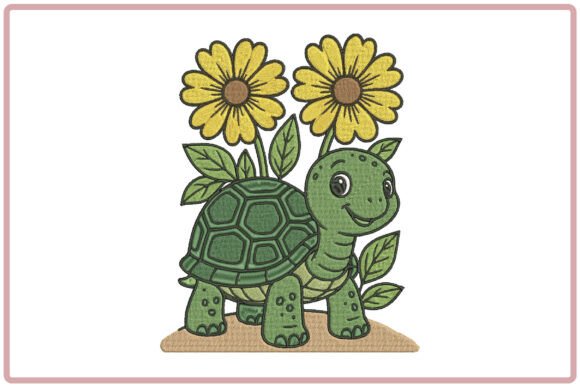
Floral Sea Turtle Embroidery Design
A Designer’s First Look: Grace, Flow, and Quiet Confidence
When I opened the Floral Sea Turtle Embroidery Design, I didn’t just see a motif—I felt a mood. It’s calm but not passive, detailed but not fussy, oceanic but grounded in warmth. The turtle’s pose is unhurried; its shell isn’t just patterned—it’s *composed*, with floral elements that grow organically from the curves rather than sitting on top like stickers. This isn’t a cartoon turtle or a botanical chart—it’s a design that breathes. As a designer who tests hundreds of embroidery files each season, I immediately knew this one would shine on natural fibers and thoughtful products—not fast fashion, but keepsakes.
Real-World Test: A Linen Tote Bag for a Coastal Boutique
Last week, I stitched the Floral Sea Turtle Embroidery Design onto a heavyweight natural linen tote—intended for a small shop launching a Summer collection of seaside-themed handmade goods. I used medium-weight cutaway stabilizer, 40-weight rayon thread, and a 5” hoop. The result? Clean satin stitch definition on the petals, smooth fill stitch in the turtle’s body, and subtle running stitch accents along the flippers that added movement without bulk. Customers noticed it instantly—not because it shouted, but because it *invited*. One buyer held the bag up to the light and said, “It looks like something my grandmother would’ve embroidered—but modern.” That’s the sweet spot: heritage craft sensibility, executed with current precision.
Where It Shines (and Where to Pause)
The Floral Sea Turtle Embroidery Design excels on stable, medium-to-heavyweight fabrics: canvas totes, cotton sweatshirts, tea towels, pillow covers, and baby swaddles. Its balanced proportions make it ideal for center-chest placement on crewnecks or lower-back embroidery on aprons. As an embroidered patch, it holds up beautifully when fused and finished with merrow edging.
But here’s what I watched closely:
- Small hoop sizes: Avoid hoops under 4”. Fine petal outlines and shell details need breathing room—tight hooping risks distortion.
- Stretchy or thin fabric: On lightweight jersey or baby knit, use tear-away + topping combo. Without it, the floral fill can sink slightly, softening contrast.
- Dark fabric: The design relies on tonal layering—not heavy black outlines—so test thread colors carefully. A deep teal thread on navy fabric reads rich; white thread on charcoal feels crisp but needs denser satin coverage.
- Curved surfaces: Not ideal for cap fronts unless resized down to 3.2” max and re-digitized for curvature. The shell’s curve doesn’t adapt well to dome-shaped hooping without manual adjustment.
What It Adds to Your Finished Product
This isn’t just decoration—it’s a quiet value amplifier. On a personalized gift (like a baby towel monogrammed with a name + the Floral Sea Turtle Embroidery Design), it elevates perceived craftsmanship. Buyers associate that kind of intentional detail with care—and care translates to trust. For an Etsy seller or small shop product, it strengthens brand consistency if your aesthetic leans coastal, botanical, or mindful. It also photographs exceptionally well in natural light, making printable mockups feel authentic—not generic.
I’ve seen similar motifs fall flat when stitch density is too high (causing puckering) or too low (losing definition). This file strikes a practical balance: enough density to hold shape through washing, but not so much that it stiffens lightweight cottons. That matters for custom apparel meant to be worn daily—not just displayed.
Designer Notes You’ll Actually Use
Before stitching your first finished product, do these five things:
- Test on scrap fabric—same weight and weave as your final piece. Watch how the petals settle and whether stabilizer shows at edges.
- Check thread color contrast in both daylight and indoor lighting. Some floral palettes shift dramatically under warm bulbs.
- Review stitch density visually in your embroidery software. If fill areas look overly granular or sparse, adjust density by ±5% before stitching.
- Confirm hoop size compatibility with your machine—and whether the design fits comfortably within your frame’s active stitching area (not just the outer hoop).
- Inspect small details at 200% zoom: are the smallest leaf tips fully digitized? Do any satin columns narrow to a single thread width? These spots often fray first in commercial embroidery.
Also—don’t skip the black-and-white mockup test. If the design reads clearly in grayscale, it’ll translate across diverse thread palettes and fabric backgrounds. And always verify licensing: if you’re selling the finished product or reselling the digital embroidery file, confirm commercial use rights upfront.
Final Thought: Not Just a Summer Design—A Story Stitch
Yes, the Floral Sea Turtle Embroidery Design fits neatly into Summer collections—beach weddings, nursery reveals, coastal markets—but its strength lies beyond seasonality. It carries narrative weight: slow living, environmental reverence, gentle growth. That resonance helps handmade products stand out in crowded feeds and craft fairs. For a craft business or creative entrepreneur, it’s not just another machine embroidery design. It’s a conversation starter. A reason someone chooses your tote bag design over a printed one. A detail that makes a personalized gift feel truly known.
If you’re evaluating it for client work, boutique branding, or your own embroidery project, ask yourself: does it reflect the feeling you want your customer to carry home? With this design, the answer—more often than not—is yes.