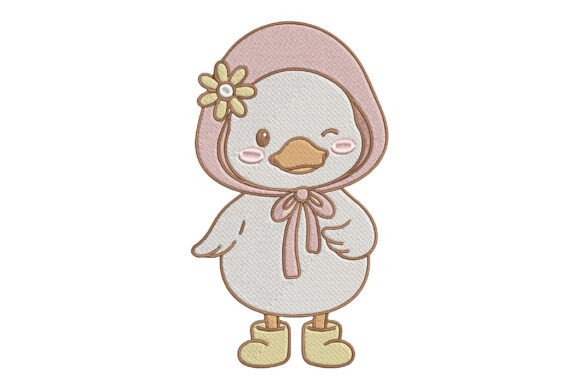
Cute Spring Duck Embroidery Design
First Impression: Soft, Playful, and Instantly Recognizable
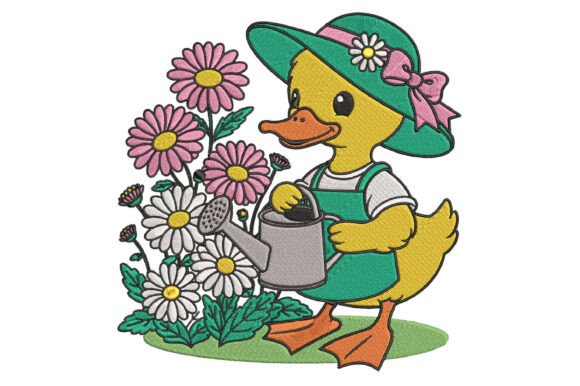
As an embroidery designer who’s prepped over 200 craft fair booths—and watched thousands of shoppers pause at a single stitch—I’ll say it plainly: Cute Spring Duck Embroidery Design lands with gentle charm, not loud novelty. It’s soft, not minimal; playful, not cartoonish; sweet, not saccharine. That bonnet, those tiny boots, and the wink? They signal warmth, nostalgia, and handmade care—not mass-produced cuteness. This isn’t farmhouse rustic or modern geometric. It’s springtime storytelling in thread: approachable, gender-neutral, and emotionally resonant for moms, grandmas, gift-givers, and self-purchasers alike.
Where It Shines on Craft Fair Products
In real booth testing, Cute Spring Duck Embroidery Design performs strongest when placed where attention lingers: on the front of a linen tea towel (centered, 3.5–4 inches tall), the pocket of a cotton tote bag (scaled to 2.75 inches), or the curved front panel of a structured cap (with careful digitizing adjustments). It also elevates small-shop products that need personality without clutter—think embroidered patches sewn onto denim jackets, mini pouches for baby essentials, or pillow covers styled with neutral linen and botanical prints.
On aprons? Yes—but only as a subtle accent near the hem or pocket, not across the chest. On market bags? Ideal for the gusset or side panel where movement catches the eye. As a handmade product for Etsy sellers, it photographs beautifully against natural light and textured backdrops—especially when paired with soft pastel threads on oatmeal or sage fabric. Its expressiveness translates well into printable mockups used for listings, helping buyers instantly imagine the finished product.
What Makes It Sell—And What Requires Caution
This design wins because it’s immediately legible at 3 inches—even from six feet away. That wink reads. The bonnet shape reads. The boot silhouette reads. That means less explanation at your booth and faster emotional connection. It also scales cleanly: large enough to feel generous on a pillow cover, small enough to anchor a delicate patch without overwhelming.
But here’s where experience kicks in: Cute Spring Duck Embroidery Design has delicate features—tiny boots, fine bonnet ribbons, and micro-details around the eye—that demand attention during production. On textured towels or thick canvas, those areas risk stitching distortion or thread breakage. On dark fabric, low-contrast thread colors will mute the wink and bonnet definition. And on curved cap surfaces? You’ll need precise hooping and possibly reduced density in the boot area to avoid puckering.
Production Realities Every Embroidery Business Owner Should Know
Before batch-producing Cute Spring Duck Embroidery Design for craft fairs or wholesale, run these checks:
- Test on scrap fabric first—especially if using terrycloth, terry-lined tea towels, or stiffened twill for caps.
- Verify thread contrast: Light yellow or buttercream thread pops best on medium-to-light backgrounds. Avoid ecru-on-cream or grey-on-charcoal unless you’re aiming for subtlety (and know your audience).
- Review spacing and stitch density: Dense fill areas (like the duck’s body) must balance with open satin edges (bonnet brim, boot soles). Too dense = stiff, bulky results; too sparse = loss of shape.
- Confirm hoop size compatibility: If your machine uses 4×4 hoops, ensure the full design fits with ⅛-inch margin—or split it thoughtfully (e.g., bonnet + duck separate from boots).
- Match stabilizer to fabric: Tear-away works for stable cottons; cut-away is non-negotiable for knits, stretchy totes, or lightweight chambray aprons.
- Create at least one real mockup before ordering 50+ units. See how the wink holds up after washing, how the bonnet lies on a curved surface, and whether boots stay crisp on a pouch seam.
- Compare fabric colors in natural light: A “soft sage” on screen may read olive under tent lighting—and dull the duck’s cheerfulness.
- Confirm commercial licensing before selling finished products. Not all digital embroidery files permit resale of physical goods—check your purchase terms for “commercial embroidery” rights.
How It Strengthens Your Booth, Brand, and Buyer Engagement
At a crowded craft fair, Cute Spring Duck Embroidery Design acts like a visual pause button. It doesn’t shout—it invites. Shoppers slow down, smile, and often say, “Oh, my niece would love this!” That’s your opening. Because it feels intentionally handmade—not generic—it supports perceived value: customers pay more for pieces that look lovingly made, not digitally stamped.
For Etsy sellers and small shop owners, it reinforces brand consistency when used across categories: same duck, different applications (tea towel + pouch + patch = cohesive collection). For boutique makers building seasonal lines, it anchors a Spring story without relying on clichés like bunnies or eggs. And for embroidery business owners managing multiple clients, its balanced complexity makes it a reliable, repeatable machine embroidery design—not so simple it feels disposable, not so dense it eats up profit margins.
Final Designer Note: Prioritize Clarity Over Cuteness
Yes, it’s adorable. But what makes Cute Spring Duck Embroidery Design truly effective is its clarity. Every element serves recognition—not just decoration. That wink isn’t just cute; it adds life. The bonnet isn’t just detail; it creates hierarchy and vintage softness. The boots aren’t just whimsy; they ground the composition and suggest movement.
So before you load it into your embroidery software: ask yourself—does this still read clearly at 2.5 inches? Does the thread pop on my target fabric? Does it feel like something someone would choose to give—and keep—for years? If yes, you’ve got a craft fair winner. If not, adjust spacing, simplify one detail, or test two thread palettes. Because in handmade markets, emotion sells—but execution earns trust.