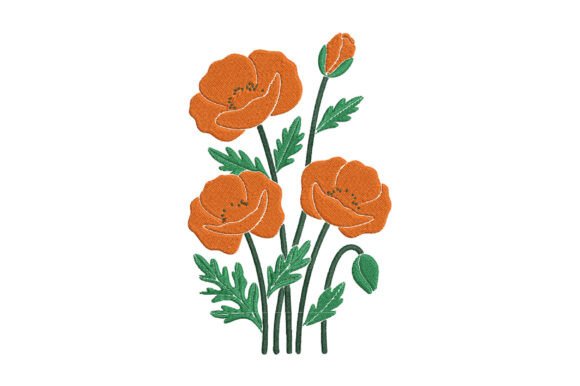
Orange Poppies Embroidery Design
A Craft Fair Designer’s First Look: Bold, Lively, and Instantly Recognizable
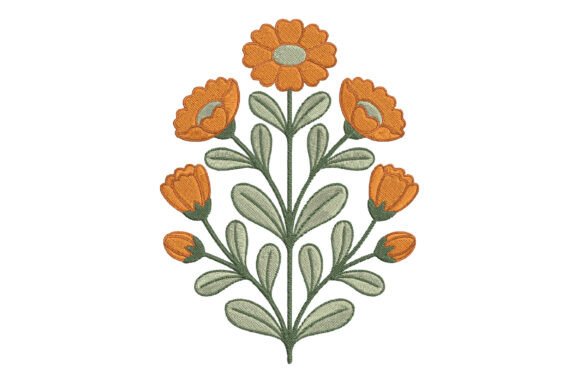
As an embroidery designer who’s packed dozens of craft fair booths—from Portland’s Saturday Market to Nashville’s Handmade Holidays—I know what stops a shopper mid-aisle: color, clarity, and confidence. The Orange Poppies Embroidery Design delivers all three. It doesn’t whisper—it blooms. This isn’t a dainty cottagecore motif or a muted botanical sketch. It’s warm, saturated, and unapologetically floral—landing somewhere between modern rustic and artistic handmade. For buyers browsing a crowded aisle, this design reads as premium before they even touch the fabric. That first impression is non-negotiable at craft fairs, where attention spans are measured in seconds.
Where Orange Poppies Embroidery Design Shines On Real Products
In my booth setup, I always lead with high-visibility items—and Orange Poppies Embroidery Design performs strongest on pieces that balance scale, surface, and story:
- Tote bag design: Centered on natural canvas or oat linen, it pops without overwhelming. At 4–5 inches wide, the poppies read clearly from six feet away—ideal for market bags that double as walking advertisements.
- Apron embroidery: Positioned just above the pocket, it adds artisanal warmth to kitchen-ready wear. The orange tones flatter both light and medium denim, and the floral shape softens utilitarian lines.
- Tea towel embroidery: Works beautifully on flour-sack cotton—especially when stitched near the hem or corner. The design’s open negative space prevents stiffness, and the vibrant thread holds up through washing and folding.
- Embroidered patch: Cleanly digitized, this transfers well to twill or felt backings. Perfect for swapping onto denim jackets or kids’ backpacks—small shop products that invite repeat customers.
- Pillow cover & pouch accents: As a single-flower focal point (not filler), it elevates otherwise minimal home goods. Customers consistently reach for pillows with this design over generic geometrics.
It’s less effective on curved surfaces like caps—unless scaled down significantly and re-digitized for low-profile stitch density. And while charming on printable mockups, avoid using it as a tiny accent on keychains or zipper pulls; those details won’t resolve cleanly in thread.
Production Reality Check: What You Must Test Before Booth Day
This isn’t just about aesthetics—it’s about reproducibility. As a working embroidery designer, I treat every machine embroidery design like a production partner. Here’s what I verify before cutting into fabric:
- Test the design on scrap fabric matching your final product—especially textured towels or thick duck canvas. Poppy petals with tight curves can pucker if stabilizer is undersized.
- Check thread contrast on both light and dark backgrounds. Orange thread sings on cream or charcoal, but fades against rust or burnt sienna. Always swatch.
- Review spacing and stitch density. Dense fill areas in the flower centers may require tear-away + cut-away combo stabilizer on lightweight linens.
- Confirm hoop size compatibility. If your machine maxes out at 4x4”, ensure the full motif fits—or plan for re-hooping (which adds time and alignment risk).
- Create at least one real mockup—not just a digital preview. Light changes everything. A sunlit booth makes orange glow; fluorescent lighting can mute it.
- Compare fabric colors side-by-side. Dye lots vary. What looks vibrant on screen may soften on oat linen versus unbleached cotton.
- Confirm commercial licensing before selling finished products. This digital embroidery file must be cleared for small business use—not just personal stitching.
Why Orange Poppies Embroidery Design Strengthens Your Brand & Booth Presence
In a sea of neutral palettes and minimalist line art, Orange Poppies Embroidery Design becomes your visual anchor. It signals creativity, confidence, and seasonal energy—without leaning into holiday clichés. At craft fairs, I’ve watched customers pause, point, and say, “I need that on *something*.” That engagement translates directly to higher average order value: someone buying a tea towel often adds a matching pouch or embroidered patch.
For Etsy sellers and small shop owners, this design also boosts listing performance. Photos of the Orange Poppies Embroidery Design on real products generate more saves and shares than flat mockups—especially when styled with complementary textures (woven baskets, ceramic mugs, dried lavender). Its vibrancy ensures strong thumbnail visibility in search feeds, and its Single Flowers category positioning makes it discoverable alongside trending spring and garden themes.
Most importantly, it reinforces handmade quality. Unlike printed transfers or iron-ons, this Embroidery design reads as intentional, dimensional, and labor-respectful. When customers see the subtle sheen of rayon or polyester thread catching light on a tote bag, they’re not just buying utility—they’re investing in craft.
Careful-Use Notes Every Designer Should Know
Even stunning designs have limits—and overlooking them risks wasted materials and frustrated customers:
- Avoid dense stitch areas on highly textured fabrics like terry cloth or heavy burlap—the design will lose definition and feel stiff.
- Don’t shrink below 3 inches wide without verifying detail retention. Tiny stamens or petal veins may collapse into blobs.
- On dark fabric, use bright orange or gold thread—not pastel or peach—to maintain contrast and energy.
- Curved cap surfaces demand re-digitizing for stretch control. Off-the-shelf files rarely adapt cleanly.
- Never skip stabilizer testing on tea towels. Their loose weave + frequent laundering demands extra support beneath high-density fills.
Remember: a great craft fair product isn’t just beautiful—it’s predictable, consistent, and built to sell under pressure. The Orange Poppies Embroidery Design checks those boxes—if you treat it like the serious commercial embroidery asset it is.