Lion Patch Embroidery Design
A Playful Yet Professional Identity Anchor for Small Business Merch
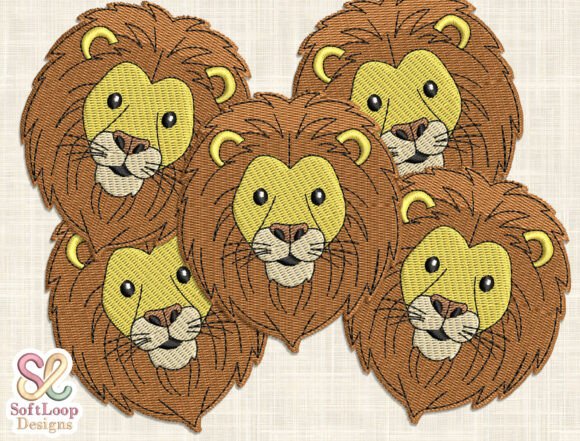
As an embroidery designer who’s developed hundreds of commercial designs for cafés, boutiques, pet brands, and handmade studios, my first impression of the Lion Patch Embroidery Design is immediate: it’s expressive, confident, and surprisingly versatile. Despite its cartoon-inspired roots—evident in the “Cartoon Eyes Embroidery Design” descriptor and playful emoji styling—it avoids feeling juvenile or overly whimsical. The bold eyebrows and soft stitched detail suggest intentionality—not just charm, but character with clarity. For small business owners building brand identity through custom apparel and embroidered patches, that balance is gold.
Where Lion Patch Embroidery Design Shines in Real Business Use
This design excels where personality meets practicality. On staff aprons for a local bakery or florist, the lion motif conveys warmth and approachability without sacrificing professionalism. As a chest patch on work shirts for a creative studio or pet-sitting service, it adds memorable visual consistency—especially when paired with simple monochrome thread colors like charcoal gray or navy on light cotton. For tote bag design or cap embroidery, the stylized eyes become an instant recognition cue: friendly, watchful, and proudly handmade.
Small businesses selling on Etsy or at craft fairs benefit especially from the Lion Patch Embroidery Design as a branded product add-on—think iron-on or sew-on patches attached to packaging, gift tags, or reusable produce bags. It also works well as a sleeve detail on uniforms or a subtle accent on the back yoke of a boutique’s signature denim jacket. Because it reads clearly at medium scale (2–3 inches), it supports both custom apparel and product packaging accents without demanding oversized real estate.
Smart Placement & Critical Considerations for Commercial Embroidery
Like any strong machine embroidery design, the Lion Patch Embroidery Design performs best when matched thoughtfully to context. Avoid placing it on highly curved surfaces—like the front of low-profile caps—unless you’ve confirmed the digitizing accommodates stretch and distortion. Similarly, while it holds up beautifully on stable fabrics like twill or canvas, test it carefully on textured fabric (e.g., linen blends or heavy duck cloth) where stitch definition may soften.
For dark uniforms or high-wash-frequency items (like café aprons), verify thread color contrast before full production—light-colored threads may fade faster, and dense stitching could stiffen lightweight materials over time. Also, if your plan includes sub-2-inch patch sizes (e.g., 1.25” embroidered patches for keychains or mini tote tags), always run a test stitch-out. Cartoon eyes rely on proportion and spacing; shrinking too far can blur eyebrow definition or compress the “soft stitched detail” mentioned in the description.
How This Design Strengthens Brand Identity & Customer Trust
Embroidered patches aren’t just decoration—they’re tactile brand signals. The Lion Patch Embroidery Design communicates reliability with playfulness: ideal for businesses that want to feel human-centered, not corporate. A pet brand using it on leashes and collars implies care and attentiveness; a florist applying it to reusable market bags suggests joyful craftsmanship. That resonance builds customer trust faster than generic logos because it feels intentional, curated, and aligned with a story.
Visually, it supports handmade product positioning without leaning into rustic clichés. Unlike overly ornate or vintage-style animals, this lion feels modern and scalable—equally at home beside clean sans-serif typography on a website or stitched beside hand-lettered signage in a storefront window. When used consistently across aprons, tote bags, and staff caps, it reinforces visual consistency and makes your small business merch instantly identifiable—even from across a farmers’ market aisle.
Practical Embroidery Designer Notes Before You Stitch
Before committing to bulk production, here’s what I always do—and recommend you do—with the Lion Patch Embroidery Design:
- Test in black and white first: Assess how shapes hold up without color distraction—especially important for licensing review and client mockups.
- Check minimum viable size: Run a 1.5” and 2” stitch-out side-by-side to confirm eyebrow clarity and eye separation.
- Review thread color contrast: Try matte vs. glossy polyester threads on your target fabric swatch—shiny threads may exaggerate cartoon features, while matte tones ground them.
- Inspect spacing and underlay: Look for tight corners or overlapping satin stitches that could cause puckering on lightweight garments.
- Confirm hoop size and stabilizer needs: If the design requires larger hoops or cutaway stabilizer, factor that into your per-unit cost and turnaround time.
- Test on real fabric: Not just swatches—run a full stitch-out on pre-washed, finished garment fabric to assess drape and wear behavior.
- Create a printable mockup for client approval: Show the Lion Patch Embroidery Design scaled correctly on an apron, cap, and tote bag—this prevents costly rework later.
- Compare alongside other design assets: Does it harmonize with your existing logo, typography, and color palette? Consistency multiplies perceived value.
- Verify commercial licensing: Since this falls under Animals and Embroidery, ensure your purchase includes rights for resale, promotional use, and small business merch distribution.
Final Thought: More Than a Lion—A Branding Catalyst
The Lion Patch Embroidery Design isn’t just another digital embroidery file. In the hands of a thoughtful small business owner or embroidery shop, it becomes a flexible branding catalyst—adding warmth to uniforms, memorability to customer gifts, and distinction to Etsy listings. Its strength lies in being expressive without excess, bold without aggression, and playful without sacrificing polish. Whether you’re launching a new line of handmade goods or refreshing your team’s look, this design earns its place in your design assets library—not as filler, but as a functional, emotionally resonant tool for building real connection through finished product.